


Introduction
The Violent Crime and Law Enforcement Act is a major piece of legislation in United States history that was designed to address rising concerns about crime and public safety. It was introduced during a period when violent crime rates were a significant issue across many American cities, and there was growing pressure on the government to take stronger action. The law aimed to strengthen law enforcement capabilities, expand federal support for crime prevention, and introduce stricter measures for dealing with serious offenses.
The act was created in response to social conditions in the late 1980s and early 1990s, a time marked by increased public fear of violent crime, drug related offenses, and urban crime waves. Policymakers faced strong public demand for safer communities, which led to the development of comprehensive crime control legislation that combined prevention programs with tougher sentencing laws.
In US criminal justice history, the Violent Crime and Law Enforcement Act holds an important place because it significantly reshaped federal crime policy and influenced how law enforcement agencies operate. It also sparked long lasting debates about crime control, sentencing practices, and the balance between public safety and justice reform.
What Is the Violent Crime and Law Enforcement Act
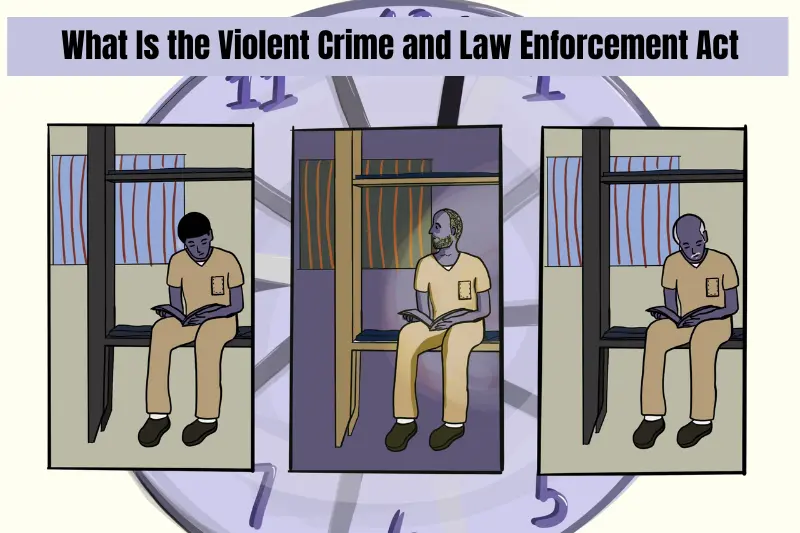
The Violent Crime and Law Enforcement Act is a federal law in the United States that was designed to strengthen the country’s response to serious and violent crimes. It focuses on improving public safety by giving law enforcement agencies more resources, expanding federal involvement in crime control, and introducing stricter legal measures for certain offenses.
In simple terms, the law was created to help police departments and justice institutions deal more effectively with rising crime challenges. It supports crime prevention programs, increases funding for local policing, and introduces policies aimed at reducing repeat offenses and improving accountability within the criminal justice system.
The act is considered one of the most significant crime control policies in US history because it combined multiple approaches into one framework, including prevention, enforcement, and punishment. Over time, it has become an important reference point in discussions about federal crime legislation, criminal justice reform, and law enforcement strategies in the United States.
Historical Background and Why It Was Introduced
During the late 1980s and early 1990s, the United States experienced a period of high concern over rising violent crime, especially in urban areas. Many communities were affected by issues such as gang activity, drug related offenses, and increased rates of homicide and assault. This created a strong sense of public insecurity and placed pressure on political leaders to respond with stronger national policies.
At the same time, law enforcement agencies were often seen as underfunded and overwhelmed. Local police departments struggled with limited resources, while federal agencies were pushed to play a larger role in supporting crime control efforts. The growing public demand for safer neighborhoods and tougher action against offenders became a major political issue.
The Violent Crime and Law Enforcement Act was introduced as a response to these conditions. It aimed to combine stricter sentencing policies with expanded support for policing and crime prevention programs. The goal was not only to punish serious offenders but also to reduce crime through community based initiatives and stronger coordination between federal and local law enforcement.
This period is often viewed as a turning point in US criminal justice history, as it marked a shift toward more comprehensive federal involvement in crime policy and shaped future discussions about law enforcement reform and public safety strategies.
Key Provisions of the Violent Crime and Law Enforcement Act
The Violent Crime and Law Enforcement Act introduced a wide range of measures designed to strengthen crime control and improve public safety across the United States. These provisions focused on prevention, enforcement, and punishment, making it one of the most comprehensive crime laws in US history.
Crime Prevention Programs
One of the major components of the act was the funding of community based crime prevention programs. These initiatives were aimed at reducing crime before it happens by supporting local communities, improving youth outreach, and strengthening cooperation between citizens and law enforcement agencies.
Stronger Sentencing Laws
The act also introduced tougher sentencing policies for serious and repeat offenders. This included stricter penalties for violent crimes and drug related offenses. The idea was to discourage repeat criminal behavior and ensure that dangerous offenders served longer prison terms.
Expansion of Law Enforcement Support
Another important provision was increased federal support for state and local police departments. This included funding for hiring additional officers, improving training programs, and providing advanced equipment to help law enforcement respond more effectively to crime.
Violence Against Women Protections
A significant part of the law focused on improving protections for victims of domestic violence and sexual assault. It provided legal resources, support services, and stronger enforcement tools to address these crimes more effectively.
Federal Role in Crime Control
The act expanded the role of the federal government in managing crime related issues. This allowed for greater coordination between federal and local agencies, helping to create a more unified approach to law enforcement across the country.
These provisions collectively reshaped how crime was addressed in the United States and remain a key point of discussion in modern debates about criminal justice policy and law enforcement reform.
Impact on Law Enforcement in the United States
The Violent Crime and Law Enforcement Act had a significant impact on how law enforcement operates across the United States. It changed both the scale and structure of policing by increasing resources, expanding federal involvement, and encouraging new strategies for dealing with crime.
One of the most immediate effects was the increase in funding for police departments. Many local agencies received financial support that allowed them to hire more officers, improve training programs, and invest in better equipment and technology. This helped strengthen their ability to respond to emergencies and manage growing public safety concerns.
The act also encouraged the development of community policing strategies. Instead of relying only on reactive enforcement, police departments began focusing more on building relationships with local communities. This approach was intended to improve trust between citizens and law enforcement while also preventing crime through early intervention.
Another important change was the stronger cooperation between federal, state, and local agencies. The law created a more connected system of crime control, where different levels of government worked together to address serious offenses. This coordination improved information sharing and made investigations more effective in many cases.
At the same time, the act also influenced long term debates about policing practices. While some viewed it as a necessary step to reduce crime and improve safety, others raised concerns about its contribution to increased incarceration rates and its broader social impact. These discussions continue to shape modern conversations about criminal justice reform and law enforcement policy in the United States.
Impact on Law Enforcement in the United States
The Violent Crime and Law Enforcement Act had a significant impact on how law enforcement operates across the United States. It changed both the scale and structure of policing by increasing resources, expanding federal involvement, and encouraging new strategies for dealing with crime.
One of the most immediate effects was the increase in funding for police departments. Many local agencies received financial support that allowed them to hire more officers, improve training programs, and invest in better equipment and technology. This helped strengthen their ability to respond to emergencies and manage growing public safety concerns.
The act also encouraged the development of community policing strategies. Instead of relying only on reactive enforcement, police departments began focusing more on building relationships with local communities. This approach was intended to improve trust between citizens and law enforcement while also preventing crime through early intervention.
Another important change was the stronger cooperation between federal, state, and local agencies. The law created a more connected system of crime control, where different levels of government worked together to address serious offenses. This coordination improved information sharing and made investigations more effective in many cases.
At the same time, the act also influenced long term debates about policing practices. While some viewed it as a necessary step to reduce crime and improve safety, others raised concerns about its contribution to increased incarceration rates and its broader social impact. These discussions continue to shape modern conversations about criminal justice reform and law enforcement policy in the United States.
Effect on Crime Rates
The impact of the Violent Crime and Law Enforcement Act on crime rates has been widely studied and debated, and it remains a complex topic in criminal justice analysis. In the years following its implementation, the United States experienced a noticeable decline in violent crime rates. However, experts emphasize that this trend cannot be linked to a single law alone.
Several factors likely contributed to the overall reduction in crime during this period. These include improved economic conditions, changes in demographics, advancements in policing strategies, and increased investment in community based crime prevention programs. The act may have played a supporting role by strengthening law enforcement resources and expanding crime control measures, but it worked alongside many other influences.
Law enforcement agencies also reported improvements in coordination and response capabilities due to the additional funding and support provided by the legislation. This helped some cities enhance their ability to address violent crime more effectively, particularly in high risk areas.
At the same time, researchers caution against assuming a direct cause and effect relationship between the law and national crime trends. Crime rates are shaped by multiple social, economic, and institutional factors, making it difficult to isolate the impact of any single policy.
Overall, the act is considered part of a broader shift in US crime policy during the 1990s, rather than the sole reason for changes in crime patterns. This balanced perspective remains important in modern discussions about criminal justice reform and policy effectiveness.
Long Term Legacy of the Law
The Violent Crime and Law Enforcement Act continues to have a lasting influence on the United States criminal justice system. Even years after its introduction, many of its policies and approaches still shape how crime is addressed at both federal and local levels.
One of the most important parts of its legacy is the expansion of federal involvement in crime control. The law strengthened the role of the federal government in supporting local police departments, funding crime prevention programs, and coordinating nationwide enforcement strategies. This shift helped create a more unified approach to handling violent crime across different jurisdictions.
The act also left a strong imprint on sentencing policy and criminal justice practices. Its emphasis on tougher penalties influenced later laws and shaped public expectations around crime and punishment. At the same time, it became a key reference point in debates about sentencing reform and prison overcrowding.
In recent years, the law has also been central to discussions about criminal justice reform. Policymakers and experts often revisit its provisions when analyzing issues such as incarceration rates, policing methods, and fairness in the justice system. As a result, it remains both a foundation and a point of reflection for modern reform efforts.
Overall, the long term legacy of the act is a mixed one. It contributed to stronger crime control systems while also raising important questions about balance, effectiveness, and fairness in criminal justice policy.
Expert Opinions and Public Views
The Violent Crime and Law Enforcement Act has generated a wide range of opinions from legal experts, law enforcement professionals, and the general public. These perspectives help explain why the law remains an important and sometimes debated part of US criminal justice history.
Many law enforcement officials view the act as a practical tool that strengthened policing capabilities. They often highlight the benefits of increased funding, improved training, and better coordination between agencies. From this perspective, the law helped police departments respond more effectively to serious and violent crime during a critical period.
Legal scholars and policy experts, however, tend to present a more mixed assessment. Some argue that while the law contributed to short term crime control improvements, certain provisions also played a role in long term challenges such as prison overcrowding and sentencing disparities. These experts often emphasize the importance of balancing public safety with fairness and rehabilitation.
Public opinion has also evolved over time. In the years immediately following its introduction, many people supported stronger crime control measures due to high concerns about safety. More recently, however, discussions about criminal justice reform have led to greater scrutiny of some of its policies, especially regarding sentencing practices and incarceration rates.
Overall, expert and public views reflect a complex picture. The act is recognized for its strong impact on law enforcement and crime policy, while also serving as a focal point in ongoing debates about how justice systems should evolve in the future.
Frequently Asked Questions
What is the main purpose of the Violent Crime and Law Enforcement Act
The main purpose of the Violent Crime and Law Enforcement Act is to reduce violent crime in the United States by strengthening law enforcement, increasing federal support for policing, and introducing stricter measures for serious offenses. It also includes crime prevention programs aimed at improving public safety.
When was the Violent Crime and Law Enforcement Act passed
The law was passed in 1994 during a period when concerns about rising violent crime were high in many parts of the United States. It represented one of the most comprehensive crime control efforts of its time.
How did the act affect law enforcement
The act provided increased funding, training, and resources for police departments. It also encouraged better coordination between federal, state, and local agencies, which improved overall crime response and investigation capabilities.
Did the Violent Crime and Law Enforcement Act reduce crime rates
Crime rates did decline in the years after the act was introduced, but experts note that this was likely due to multiple factors, including economic changes, policing strategies, and broader social trends. The law may have contributed, but it was not the only cause.
Why is the law controversial today
The law is controversial because some of its provisions, especially stricter sentencing rules, are believed to have contributed to higher incarceration rates. This has led to ongoing debates about fairness, effectiveness, and criminal justice reform in the United States.
Conclusion
The Violent Crime and Law Enforcement Act represents a major moment in United States criminal justice history. It was introduced in response to rising concerns about violent crime and aimed to strengthen public safety through expanded law enforcement support, stricter sentencing policies, and increased federal involvement in crime control.
Over time, the law has had a wide range of effects. It helped improve policing resources and encouraged new crime prevention strategies, while also shaping long term policy discussions about sentencing, incarceration, and justice system reform. Although crime trends changed in the years after its implementation, experts agree that many factors contributed to those shifts beyond this legislation alone.
Today, the act remains an important reference point in debates about how to balance effective crime control with fairness and long term justice reform. Understanding its purpose, impact, and controversies helps provide a clearer view of how modern criminal justice policies in the United States have developed over time.
